

When your dog suddenly starts limping or refuses to put weight on a hind leg, a torn cruciate ligament could be the culprit. This common orthopedic injury affects dogs of all ages and breeds, turning active companions into reluctant movers almost overnight. The sudden shift from playful runs to cautious steps signals that something significant has happened within the knee joint, and without proper treatment, the damage only worsens.
At Broadway Veterinary Hospital, our team of UC Davis-trained veterinarians, including Dr. Tyler, who specializes in advanced orthopedic surgery, like TPLO, can restore your dog’s mobility and quality of life. With state-of-the-art surgical equipment and decades of combined experience across our Sacramento locations, we provide the comprehensive care your pet needs to recover fully from cruciate ligament injuries.
What Is a Cruciate Ligament Tear in Dogs?
The cranial cruciate ligament functions as a primary stabilizer within the canine knee joint, preventing forward sliding of the shin bone relative to the thigh bone during weight-bearing activities. When this ligament tears or ruptures, the knee becomes unstable, causing the tibia to thrust forward with each step. This instability leads to cartilage damage, inflammation, and progressive arthritis that compromises your dog’s comfort and mobility.
Most cruciate ligament injuries in dogs occur through gradual degenerative changes rather than acute trauma. Age-related deterioration, chronic inflammation, anatomical abnormalities, and excessive tibial slope all contribute to ligament weakening over time. Certain breeds are at higher risk, and heavier dogs are more likely to experience severe complications when the ligament fails.
Signs Your Dog May Have a Torn Cruciate Ligament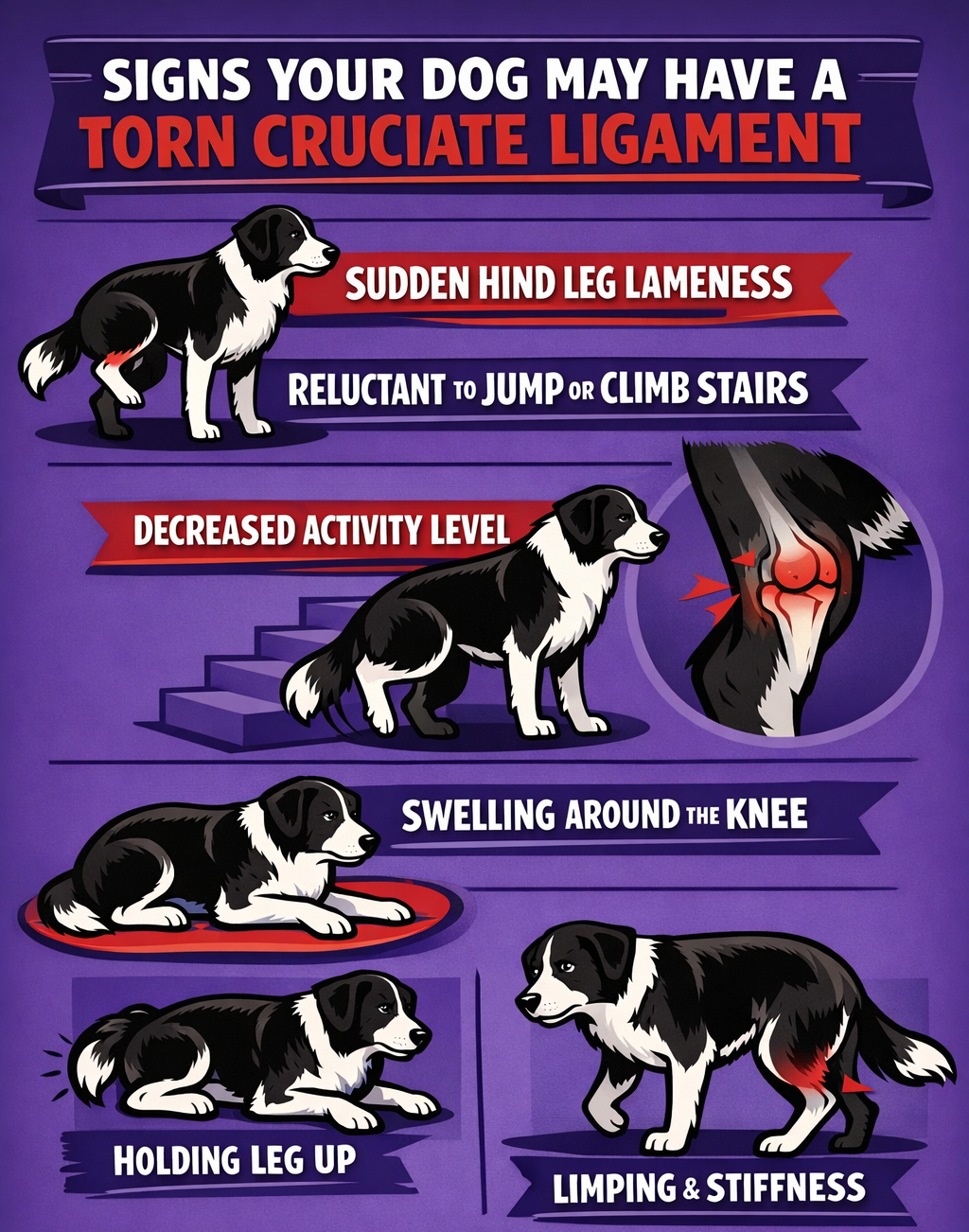
Dogs with cruciate ligament damage often display sudden hind leg lameness, reluctance to jump or climb stairs, decreased activity levels, and swelling around the knee joint. Some dogs carry the affected leg completely off the ground, while others show intermittent limping that worsens after exercise. The injury causes pain that limits your dog’s willingness to engage in previously enjoyable activities.
Understanding TPLO Surgery
Tibial plateau leveling osteotomy is a biomechanical approach to treating cruciate ligament tears by eliminating the need for the ligament. Rather than attempting to replace or repair the damaged ligament, TPLO surgery changes the angle of the tibial plateau to neutralize the forward thrust forces that destabilize the knee. Research published by the National Institutes of Health demonstrates that TPLO consistently restores dogs’ limb function to normal levels with a low risk of long-term complications.
How the TPLO Procedure Works
The surgical procedure involves making a curved cut through the top portion of the tibia bone, rotating the tibial plateau backward to achieve an appropriate angle, and securing the bone with a specialized metal plate and screws. Surgeons typically aim for a postoperative tibial plateau angle between five and fourteen degrees, with five degrees considered ideal for most patients. This repositioning eliminates cranial tibial thrust, creating dynamic stability without requiring the cruciate ligament.
During surgery, veterinarians remove torn ligament remnants and carefully examine both meniscus cartilages for damage. The medial meniscus frequently sustains tears secondary to cruciate ligament rupture, requiring partial removal to prevent ongoing pain and lameness. Addressing meniscal damage during the initial TPLO procedure reduces the likelihood of complications during recovery.
Recovery and Outcomes After TPLO Surgery
Recovery from TPLO surgery generally progresses more rapidly than other cruciate ligament repair techniques. Approximately half of all dogs begin bearing weight on the operated leg within twenty-four hours of surgery, and most show moderate weight-bearing within two weeks. Dogs with partial ligament tears typically recover faster than those with complete ruptures, occasionally returning to near-full function within two weeks.
The bone requires approximately eight weeks to heal completely at the osteotomy site. During this period, restricted activity prevents complications and promotes proper bone fusion. Physical rehabilitation can accelerate healing and improve functional outcomes, though your veterinarian will provide specific guidelines based on your dog’s individual condition. Post-surgical care plays a crucial role in long-term success.
Long-Term Prognosis and Activity Levels
Studies show dogs undergoing TPLO can return to full normal function by one year postoperatively, resuming running, jumping, and playing without significant limitation. While some degree of arthritis remains inevitable following cruciate ligament injury, dogs experience a far superior quality of life after TPLO compared to conservative management or other surgical techniques. Weight-bearing function improvements appear within the early postoperative period and maintain stability for years following surgery.
Older dogs benefit from TPLO just as younger patients do, though senior pets may require additional considerations during recovery planning. The procedure is effective across all sizes, from small to giant breeds, making it widely applicable regardless of your dog’s physical characteristics.
Trust Broadway Veterinary Hospital for Your Dog’s TPLO Surgery
When your dog faces a cruciate ligament injury, choosing the right veterinary team makes all the difference in recovery outcomes. Our veterinarians bring specialized training in advanced surgical techniques, including TPLO procedures that restore mobility and eliminate pain. We utilize sophisticated surgical equipment designed specifically for orthopedic procedures, ensuring precision and optimal results for every patient.
Broadway Veterinary Hospital serves the Sacramento community with two convenient locations and offers comprehensive surgical services backed by decades of combined expertise. Our doctors maintain their commitment to practicing medicine at a level that exceeds standard care, providing advanced diagnostics and treatments that minimize the need for specialty referrals. If your dog shows signs of a cruciate ligament injury, contact our team today to schedule a consultation and learn how TPLO surgery can restore your companion’s quality of life.