
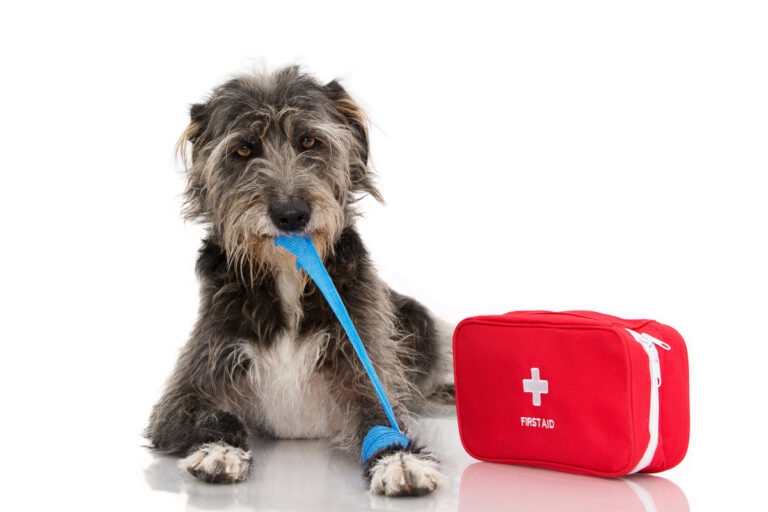
Emergencies strike without warning—a cut paw on a hike, a broken nail during playtime, or a sudden illness in the middle of the night. In those critical moments, having proper supplies immediately available can mean the difference between managing an injury calmly and facing a chaotic crisis. Every pet owner needs a well-stocked first aid kit, yet many underestimate its importance until they desperately need one.
At Broadway Veterinary Hospital, our team of UC Davis-trained veterinarians Dr. Sam Varon and Dr. Tyler Baum have treated countless emergencies that could have been better managed with proper preparation. While nothing replaces professional veterinary care, having the right supplies on hand allows you to provide immediate assistance and stabilize your pet until you reach our clinic.
The Foundation: Basic Wound Care Supplies
Bandaging materials form the cornerstone of any pet first aid kit. Self-adhering bandage wraps work particularly well because they stick to themselves without adhering to fur, making application and removal less stressful for injured animals. Include sterile gauze pads in multiple sizes for covering wounds, gauze rolls for wrapping injuries, and adhesive medical tape to secure dressings. Cotton balls or pads help with applying medications or cleaning around wounds without leaving fibers behind.
Bandage scissors with rounded tips allow you to safely cut materials and remove bandages without risking additional injury to frightened pets. Include tweezers for removing splinters, thorns, or ticks embedded in skin. A digital thermometer proves essential for monitoring body temperature—normal ranges for dogs run between 99.5 and 102.5 degrees Fahrenheit, and deviations signal potential problems requiring immediate veterinary attention.
Cleaning and Disinfecting Solutions
Proper wound cleaning prevents infections and promotes healing. Pet-safe antiseptic solutions like chlorhexidine effectively clean cuts, scrapes, and abrasions without the stinging sensation of alcohol-based products. Sterile saline solution or eye wash serves multiple purposes—flushing debris from eyes, rinsing wounds, or irrigating affected areas. Include needleless syringes for administering these solutions, as they allow controlled flushing of wounds or delivery of oral medications when needed.
Antibiotic ointments formulated specifically for pets help prevent bacterial infections in minor wounds. Never assume human products are safe—some contain ingredients toxic to animals, so always use veterinary-approved options or consult your veterinarian before application. Styptic powder or gel stops bleeding from broken or over-trimmed nails quickly by promoting clotting at the injury site.
Safety and Restraint Equipment
Even the gentlest pet may bite when frightened or in pain. A properly fitted muzzle protects both you and veterinary staff during treatment of injuries. Choose breathable mesh designs available in multiple sizes, and introduce your pet to the muzzle gradually during calm moments so it doesn’t add additional stress during emergencies. Never muzzle animals who are vomiting, having difficulty breathing, or unconscious, as this creates dangerous airway obstruction risks.
Include a sturdy spare leash and collar since originals may break or come off during accidents. A blanket or large towel serves multiple purposes—providing warmth for pets in shock, creating a makeshift stretcher for transporting injured animals, or wrapping around cats for safe restraint. A flashlight helps you examine injuries in dark areas or during power outages.
Critical Information and Medications
Emergency contact information belongs at the top of your kit. Write down your veterinarian’s phone number, the nearest 24-hour emergency veterinary hospital, and the Pet Poison Helpline at 1-855-764-7661. Keep a current copy of your pet’s medical records including vaccination history, chronic conditions, current medications, and known allergies in a waterproof bag. Include recent photos of your pets—if you become separated during disasters, these help prove ownership and assist others in identification.
Store a small supply of any prescription medications your pet takes regularly, along with clear dosing instructions. This ensures continuity of care if you cannot access your regular supplies or need to evacuate quickly. Keep hydrogen peroxide on hand—veterinarians may instruct you to induce vomiting in certain poisoning cases, but only use this under direct professional guidance as it can be dangerous when used inappropriately or in specific breeds like brachycephalic dogs.
Additional Comfort and Practical Items
Pets experiencing medical emergencies need hydration and sometimes caloric support. Pack a collapsible bowl for water and include bottles of fresh water in your kit. Small quantities of your pet’s regular food or treats can help distract anxious animals during treatment, provided they can safely eat. Never offer food or water to vomiting pets, those having seizures, or animals with altered consciousness.
Pet cleaning wipes and towels help manage the messy reality of emergencies—blood, urine, anal gland secretions, and vomit frequently accompany injuries or illnesses. Having supplies to quickly clean your pet provides comfort and maintains hygiene during transport to veterinary care. An emergency blanket provides warmth for pets in shock, though avoid using it on animals suffering from heat stroke.
Tailoring Your Kit to Your Pet’s Needs
Different species, breeds, and individual health conditions require customized supplies. Dogs with long coats may need additional grooming tools to access injuries beneath fur. Exotic pets like rabbits, ferrets, or guinea pigs require species-specific supplies and handling techniques—consult Dr. Tyler Baum, who specializes in exotic and avian medicine, for guidance on preparing appropriate first aid supplies for non-traditional pets. Senior animals with chronic conditions may need additional medications or specialized equipment.
Consider your lifestyle when assembling kits. Outdoor enthusiasts should pack portable versions for hiking or camping trips, while families might maintain comprehensive home kits plus smaller travel versions for car trips. Review and replenish supplies every six months, checking expiration dates on medications and replacing used items promptly.
When First Aid Isn’t Enough
First aid supplies bridge the gap until professional care becomes available—they do not replace veterinary expertise. Always contact your veterinarian or emergency clinic when injuries occur, even if they initially appear minor. Some situations demand immediate professional intervention: difficulty breathing, profuse bleeding that doesn’t stop with pressure, suspected poisoning, seizures, inability to stand or walk, severe pain, distended abdomen, or obvious fractures. Dr. Sam’s extensive experience with surgical procedures including orthopedic repairs means serious injuries receive expert treatment when you reach our clinic.
Time-sensitive emergencies like bloat, heatstroke, or severe trauma require rapid response—use your first aid kit to stabilize while someone else drives to the nearest veterinary facility. Never delay seeking care because you feel your supplies should handle the situation.
Partner With Broadway Veterinary Hospital for Emergency Preparedness
Creating a first aid kit represents just one aspect of comprehensive pet safety planning. Schedule a wellness examination to discuss your pet’s specific needs and receive personalized guidance on emergency preparedness. Our family-owned practice serves the Sacramento community with both routine and urgent care, ensuring help is available when your pet needs it most.
Contact our office today to schedule an appointment or discuss creating a customized first aid plan for your pet. We’ll review appropriate supplies, demonstrate basic first aid techniques, and ensure you feel confident handling minor emergencies while knowing when professional intervention becomes necessary. Your pet’s safety and wellbeing are our priority, and preparation today provides peace of mind for tomorrow’s uncertainties.